TA logoThe Technical Artist
Home/Tech Art/Soft Skills
article 02
tech art

Soft Skills For Technical Artists

Starterguide~3 min readreviewed 2026-07-05

Technical art looks technical, but a lot of the job is people work with code attached. You win when other people can move faster and feel less confused.

2.1Why Soft Skills Matter

Your shaders, tools, and pipelines exist for one reason: to make other people more productive. TAs spend a lot of time translating between people saying "I want this to feel warmer" and people saying "we need to hold 60fps and keep draw calls under control."

To do that well, you need to understand what each group cares about and what keeps them up at night. Since your success shows up in other people's productivity, empathy is a technical requirement.

The uncomfortable truth

A TA who communicates clearly and listens well will often beat a brilliant TA nobody understands. Tools built from real conversations solve better problems, clear docs get used faster, and feedback keeps the tool from quietly rotting.

2.2Communication And Translation

The core communication skill is translation in both directions:

  • When an artist says "it looks flat", hear: needs better normal mapping, AO, or lighting contrast.
  • When an engineer says "we're draw-call bound", translate for artists: we need to combine some materials and use atlases.

Beyond translation:

  • Documentation - one of the best returns on your time. One clear page can save a week of repeated explanations.
  • Active listening - repeat back what you heard, ask the obvious questions, watch how people actually work, and look for the real need under the request.
  • Feedback - be specific, talk about the work, and do something visible with the feedback you get.
  • Meetings - bring an agenda, time-box the wandering, end with owners, and follow up while everyone still remembers what happened.

2.3Time Management And Prioritization

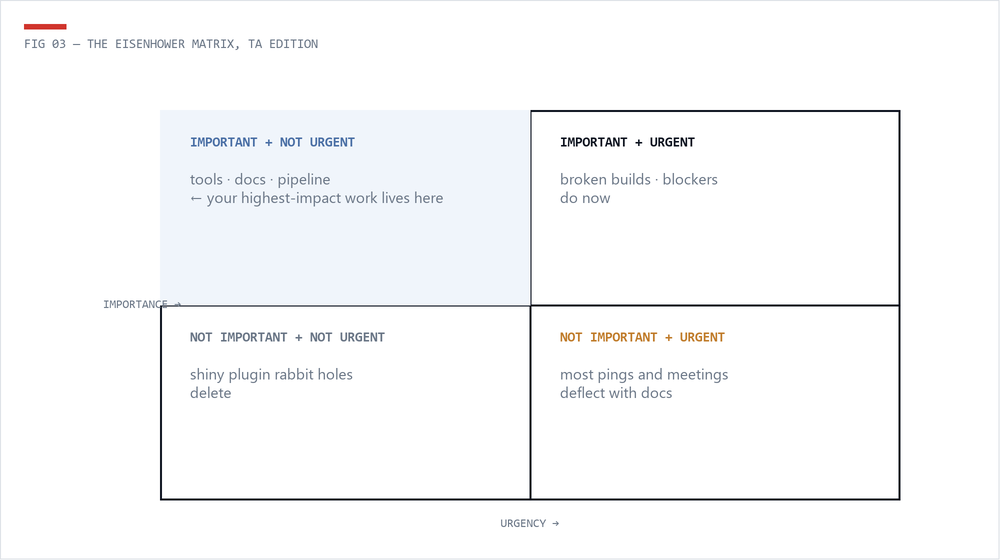
Eisenhower matrix adapted for technical artists
fig 03 - where your highest-impact work hides

TAs get pulled in two directions: reactive work like fires, broken builds, and questions, and proactive work like tools, pipeline cleanup, and docs. If you don't protect the second bucket, it disappears.

A lot of your best work is important before it becomes urgent. The trick is keeping urgent requests from eating every useful hour. A few habits help:

  • Time blocking - reserve 2-3 hour blocks for deep work.
  • Office hours - a predictable window for support questions.
  • The 15-minute rule - handle quick requests immediately, schedule longer ones.
  • Automation as investment - if you've done it three times, it's probably asking to become a script.
  • Documentation as deflection - answer it once, then link the page forever.
Context switching is expensive

A 5-minute interruption can easily cost 20 once you rebuild the mental model. Batch similar work, leave yourself breadcrumbs before switching, and be clear about focus time.

2.4Career Development And Leadership

As TAs get more senior, the job becomes less about doing every task yourself and more about making the whole team sharper. The path usually splits: the Individual Contributor track toward Principal TA, and the Management track toward Lead or Director.

Key leadership skills:

  • Running useful one-on-ones and setting goals people can actually act on.
  • Giving performance feedback early enough that review season has no ambushes.
  • Mentoring junior TAs with pairing, stretch tasks, and reviews that teach the idea, not just the fix.
  • Emotional intelligence - knowing your triggers, pausing before you react, and reading the room before you land a point.

Whichever track you choose, soft skills are not bonus points. They're how your technical skills actually reach people.